
Trump Does Not Understand Iran
Iran was built to never yield. Trump has not grasped this yet — and every move he makes proves it.

Foreign Affairs Newsletter
Written by Luca Salvemini
No. 161 - May 10, 2026
A new issue of Strategic Atlas is approaching.
This week, I will announce both the release date and the country selected for the next report.
As always, the analysis will examine the geopolitical logic, economic structure, strategic vulnerabilities and international positioning of a single state through a long-form, data-driven approach.
Strategic Atlas is reserved exclusively for paid subscribers.
The latest issue, dedicated to Vietnam, is already available to paid subscribers.

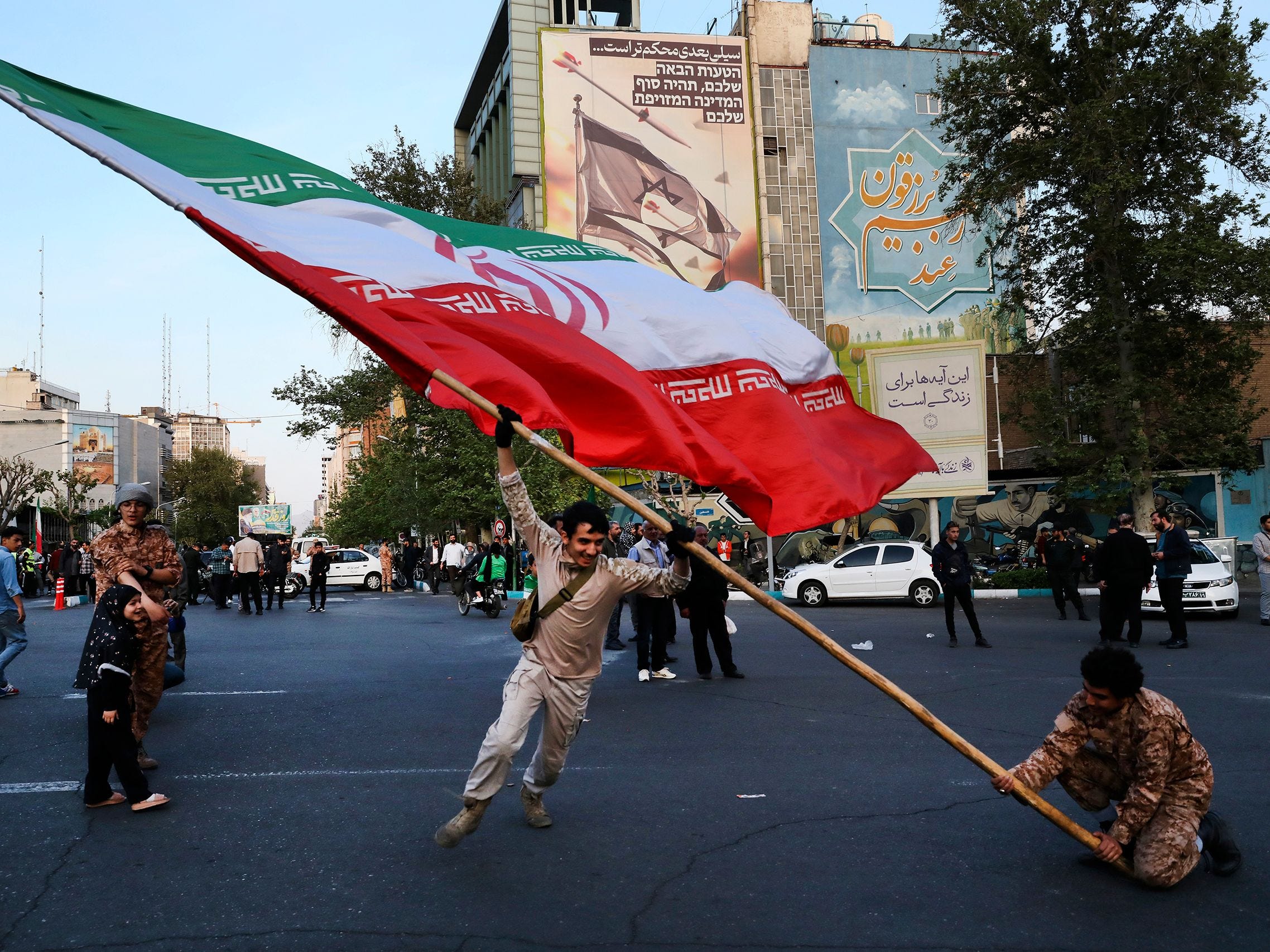
On the sixtieth day of war, the contest between the United States and Iran is being fought on the terrain of patience.
Convinced that it can bring the theocracy to its knees under the weight of punishing economic deprivation, Washington has in recent weeks staked its position on strangling Iranian maritime traffic in an attempt to salvage — at the very least — its own thalassocracy.
Thus, amid blockades and counter-blockades, the Pentagon launched Project Freedom: the ill-fated operation that managed to escort a mere two vessels before triggering Iranian reprisals against the United States Navy and the Emirati petroleum facility at Fujairah.
Suspended after less than two days, the mission laid bare — once again — the severe constraints on Washington’s room for manoeuvre in the Strait, while simultaneously consolidating Tehran’s standing.
This episode is merely the latest in a protracted series of miscalculations by President Donald Trump regarding the Iranian regime.
In recent months, Trump has repeatedly deluded himself into believing that a combination of diplomatic, military and economic pressure would compel the regime to capitulate and accept the terms dictated by Washington.
Even before the outbreak of hostilities, Trump had convinced himself that Iran would never seal the Strait of Hormuz, on the assumption that the initial shock of American bombardment would be sufficient to bring the regime crashing down within days.
The misreadings persisted in the weeks that followed: on his Truth Social platform, Trump repeatedly appeared at a loss to explain why Iran refused to yield to his threats.
Even now, as the Wall Street Journal has reported, Trump has expressed frustration that the naval blockade, despite inflicting genuine damage on the Iranian economy, has failed to coerce the regime into submission.
American intelligence itself acknowledges that Iran’s stockpiles of missiles and rockets have sustained no significant depletion.
All of this reveals that Trump has not yet grasped — or perhaps does not wish to grasp — the single most consequential feature of the Iranian regime: the fact that since its very founding in 1979, it was engineered to sustain an indefinite defence against external enemies, and above all against the United States.
Situated at the crossroads between the Mediterranean and the Indian subcontinent, this territory has historically been the theatre of relentless turbulence, conditioning its inhabitants to reckon with the precariousness of existence.
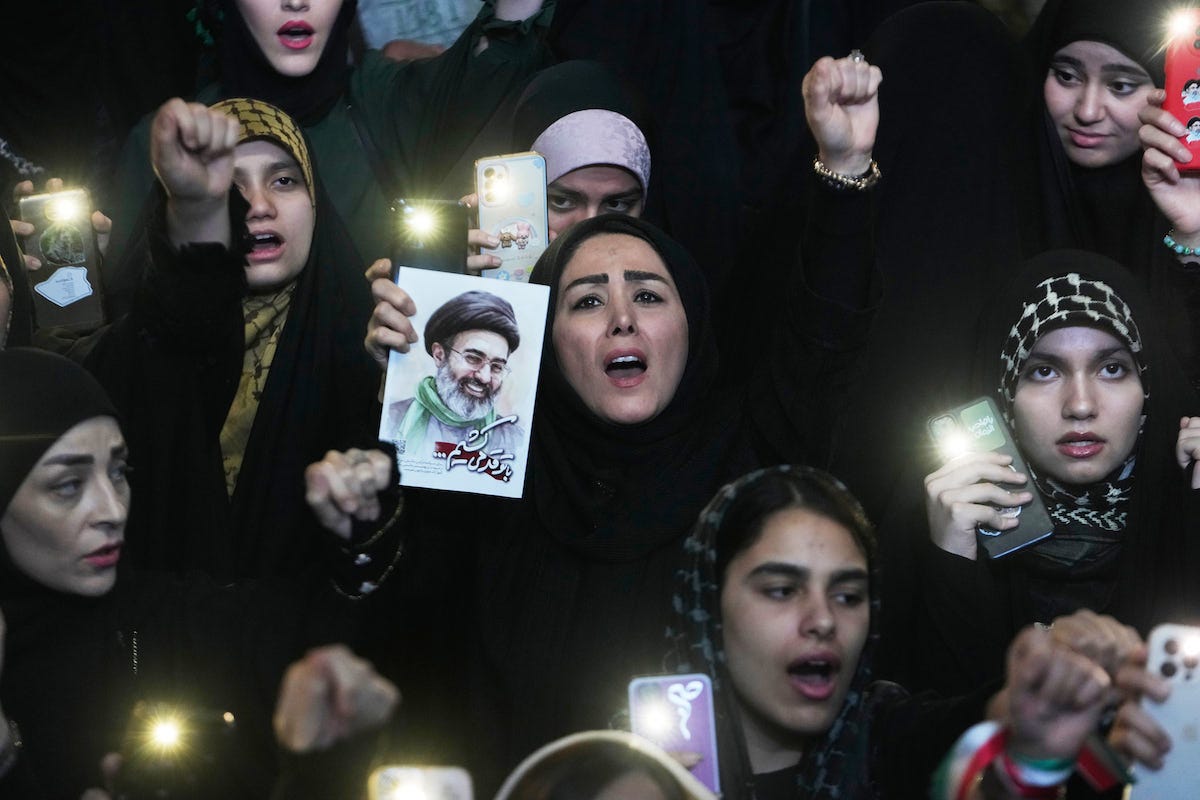
This is the very foundation of the regime’s ideology and internal legitimacy — and, in a meaningful sense, the very justification for the Islamic Republic’s existence: to resist at any cost, even when that cost is catastrophic, even when doing so appears irrational.
In over two months of war, Trump has failed to apprehend this element of apparent irrationality — which, from the regime’s perspective, is entirely rational.
This is not to say that Iranian resilience is limitless, nor that the regime can withstand any conceivable pressure from the most powerful military force on earth. Things could change, and change swiftly. What it does mean is that Trump has systematically underestimated it — at least thus far.
The notion of Iran as a besieged nation obliged to defend itself against external threats did not originate with the current regime.
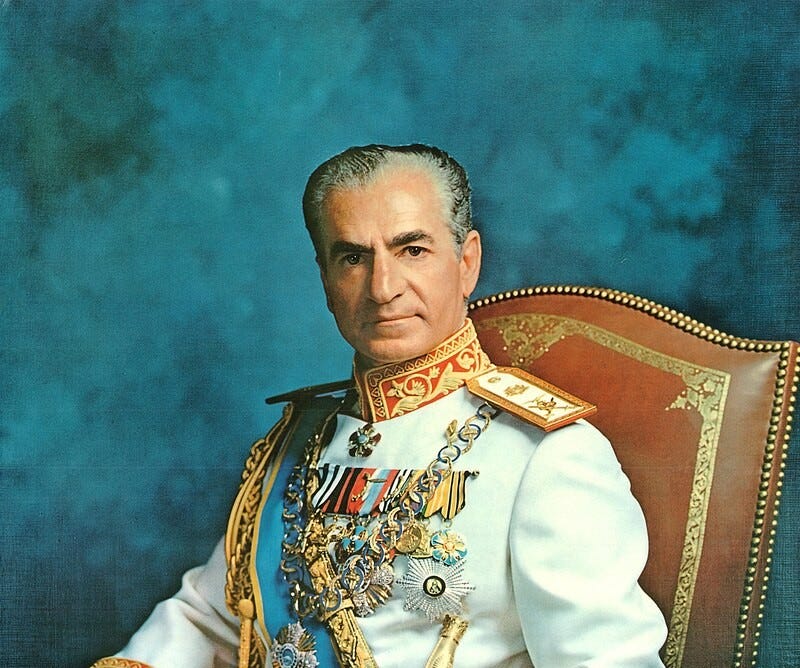
Iran’s history across the nineteenth and twentieth centuries is a chronicle of invasions, foreign interference and protectorates.
Even Shah Mohammad Reza Pahlavi, who governed the country from 1941 until the revolution of 1979, was consumed by the imperative of arming Iran against outside encroachment — though his principal preoccupation was the Soviet Union rather than the United States.
When the regime assumed power, it entered almost immediately into a harsh confrontational dynamic with Washington, which from the earliest months imposed policies of containment and penalisation against Iran, partly in response to the hostage crisis of 1979 to early 1981.
In 1980, Saddam Hussein’s Iraq invaded Iran — and that proved a watershed. The Iran-Iraq War lasted eight years, was ferociously complex and sanguinary, but in the decades that followed, Iranian official memory mythologised it thus: Iran had fought alone not merely against Iraq, but against the entire world, which had bankrolled, armed and sustained Saddam’s regime.
Encircled and abandoned, Iran had survived through the unyielding resolve of its people and its revolutionary government.
This narrative is only partially accurate, yet that war nonetheless forged the present Iranian ruling class — a generation shaped in the crucible of resistance at all costs.
Even the current Supreme Leader, Mojtaba Khamenei, the country’s pre-eminent military and religious authority, is a veteran of that conflict.
As the Iranian-American analyst Vali Nasr writes in his book Iran’s Grand Strategy, the idea of resistance has “shaped the Islamic Republic, its politics, its economy and its social institutions.” Particularly significant is the concept of defa’e moqaddas — sacred defence — which emerged from the war against Iraq.
Initially it expressed the readiness of the Iranian people to make any sacrifice in defence of the homeland. In the decades since, the regime has effectively hollowed out that concept, demonstrating instead a willingness to inflict any sacrifice upon the population in order to defend itself.
This ideological disposition has translated into concrete policy.
From the early 2000s onward, the confrontation with the United States and Israel intensified markedly, and the regime devised an elaborate architecture of deterrence both to forestall attack and to sustain itself in the event of war.
Externally, it constructed the so-called Axis of Resistance — a network of allied militias operating across the Middle East that have in recent months bolstered Iran’s war effort: Hezbollah in Lebanon, the Houthis in Yemen, Shia militias in Iraq, and Hamas in the Gaza Strip, each with varying degrees of fealty.
At the military level, the regime has adopted what analysts describe as a “mosaic” structure, designed to ensure that its armed forces remain operational during conflict through radical decentralisation of command.
The regime is, moreover, possessed of extraordinary institutional depth: should a leader be eliminated, a constellation of potential successors stands ready to step into the breach.
On the economic front, the regime has spent decades habituating the population to absorb sanctions and austerity, while pursuing autarky — the domestic production of everything the country requires — by every available means.
Internal loyalty has been secured through the centralisation of economic activity and the distribution of public appointments: today, millions of Iranians depend on the regime for their livelihoods, either as holders of state employment or as participants in enterprises bound to state interests.
The Iranian regime is vast and variegated, and the ideology of unremitting resistance is held with varying intensity depending on the faction in power and the period in question.
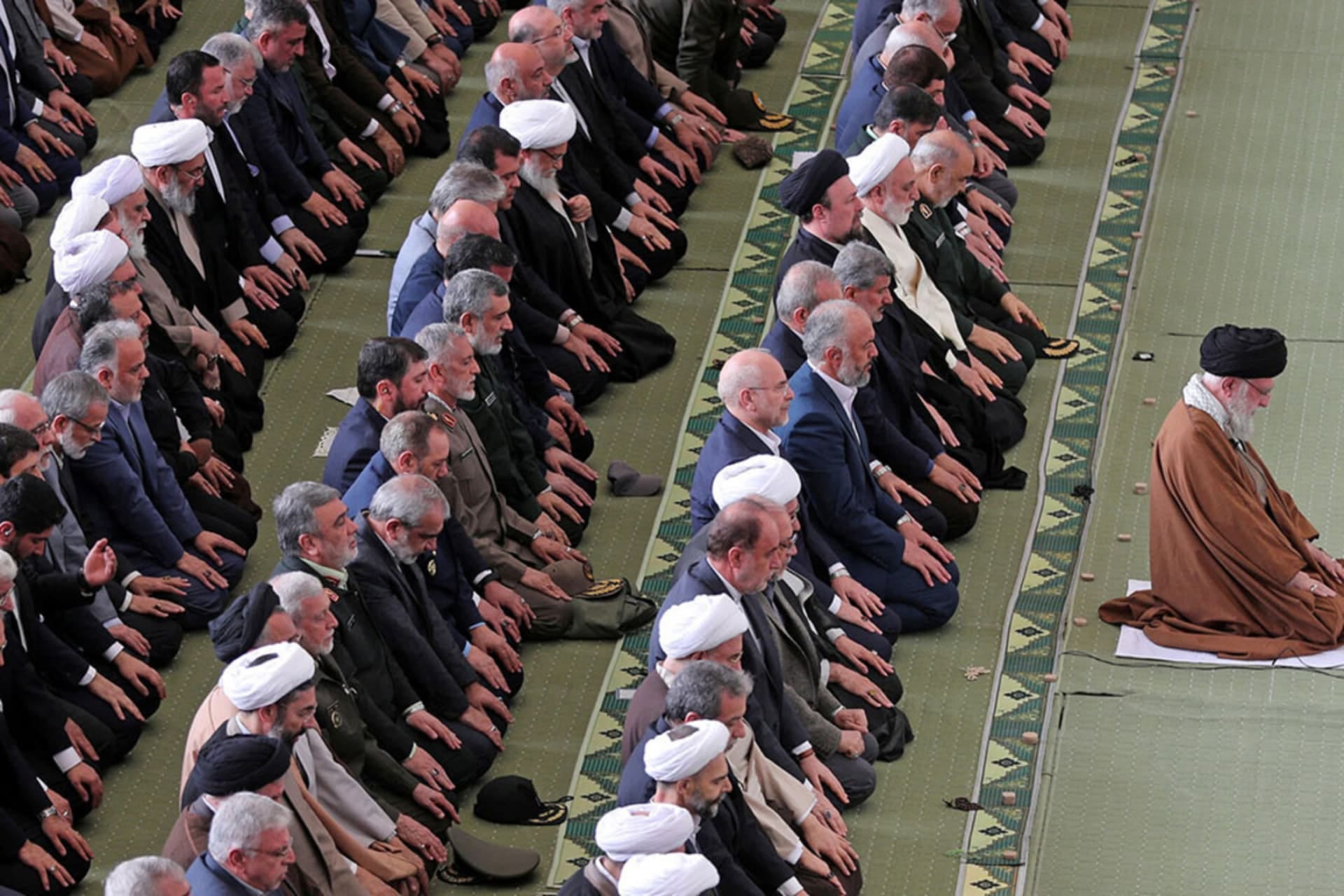
It is championed most fervently by the Supreme Leader and the Islamic Revolutionary Guard Corps — the country’s most formidable armed body — while more reformist elements within the system would countenance greater accommodation.
The war, however, has empowered the hardliners.
The ideology of resistance has, of course, its limits — a threshold beyond which even the regime’s prodigious will to endure might ultimately give way. That breaking point could be reached through intensified military strikes, amplified economic strangulation, or a popular insurrection, among other contingencies.
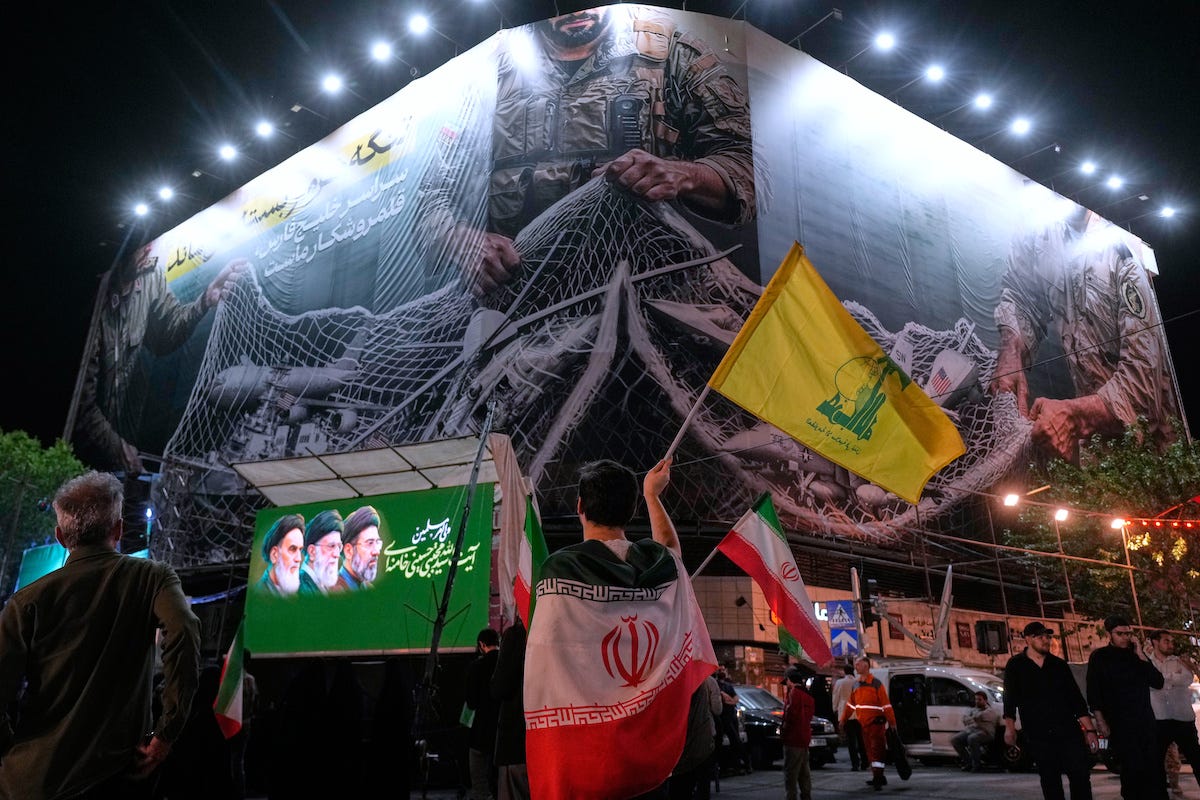
A significant defection from within the regime could equally prove decisive.
The problem for the United States is that this threshold has not yet been reached, and no form of pressure applied by the Trump administration thus far appears to have yielded the results it anticipated.
Energy sector specialists believe Iran has at least several weeks before being compelled to curtail production in ways that might cause lasting damage to its petroleum infrastructure.
In the meantime, Iran — which in April was exporting approximately 1.81 million barrels of oil per day — can reduce output while continuing to stockpile crude aboard idled or ageing tankers, each capable of holding around two million barrels, or redirect a portion overland and by rail to Pakistan.
During Trump’s first term, Iran reduced production to roughly 200,000 barrels per day without inflicting significant structural damage on its oil infrastructure.
“Iran is not even particularly close to beginning” to shut down its wells, said Brett Erickson of Obsidian Risk Advisors. The sanctions and blockade will have an impact, but “there is no realistic scenario in which they produce the necessary result within a timeframe compatible” with Trump’s political imperatives. Even if the war were to end today, Erickson added, “it will take many months before the situation returns to anything resembling normality.”
Experts are sceptical that time is on Trump’s side.
“We can certainly inflict further damage on the Iranian economy, but they have withstood greater pressure than virtually any other economy in modern history, and it has produced neither regime collapse nor more reasonable positions,” said Suzanne Maloney, Iran specialist and director of the Foreign Policy programme at the Brookings Institution.
“I believe President Trump does not truly understand what motivates Iranians,” said Sanam Vakil, director of the Middle East and North Africa programme at Chatham House. “They do not make decisions on the basis of GDP — if they did, they would have reached an agreement years ago.”
If anything, Iran’s positions have hardened over the course of the war. Yet Trump’s tactics have not changed. “Every time pressure has failed to produce the desired outcome, he has reached for a new coercive instrument that he believed would magically deliver victory,” said Ali Vaez, director of the Iran project at the International Crisis Group. “He always believes he is one final turn of the screw away from success.”
This is not to say that American strategy is not inflicting suffering. It is.
But Iran is a sufficiently authoritarian state that the political mechanisms which might otherwise produce pressure toward compromise simply do not exist, as Maloney has observed. “Trump, by contrast, faces the midterm elections in the autumn. And voters will tolerate only a finite quantity of economic pain.”
This renders all the more pertinent the observation that the average price of petrol in the United States has surpassed $4.50 per gallon, closing in daily on the all-time record of $5.01 reached in June 2022. The cost of aviation fuel has doubled; airfare prices have risen by 20 per cent; cancellations are mounting.
While the Iranian regime has spent decades engineering itself to withstand enormous suffering and violence — and has cruelly conditioned its population to do likewise — in democracies, five percentage points of inflation can be sufficient to topple a government.
Confronting totalitarian regimes is both necessary and right. But the strategy of “let us see who can endure more” does not work.
Yet this is not to suggest that the situation inside Iran is anything approaching tranquil or impervious to the damage inflicted by the American-Israeli offensive.
Iran’s current historical conjuncture is defined by a multi-layered crisis: geopolitical, economic and generational.
It is no coincidence that the epicentre of recent protests has been Tehran’s grand bazaar. Throughout Iranian history, the bazaar has served as a barometer of sociopolitical tension: when contradictions reach boiling point, the merchants shutter their stalls.
Since October 7th, the Islamic Republic has witnessed the progressive erosion of its regional sphere of influence. The degradation of Hamas, the decapitation of Hezbollah and the collapse of Alawite-led Syria have delivered a stinging blow to Persian pride.
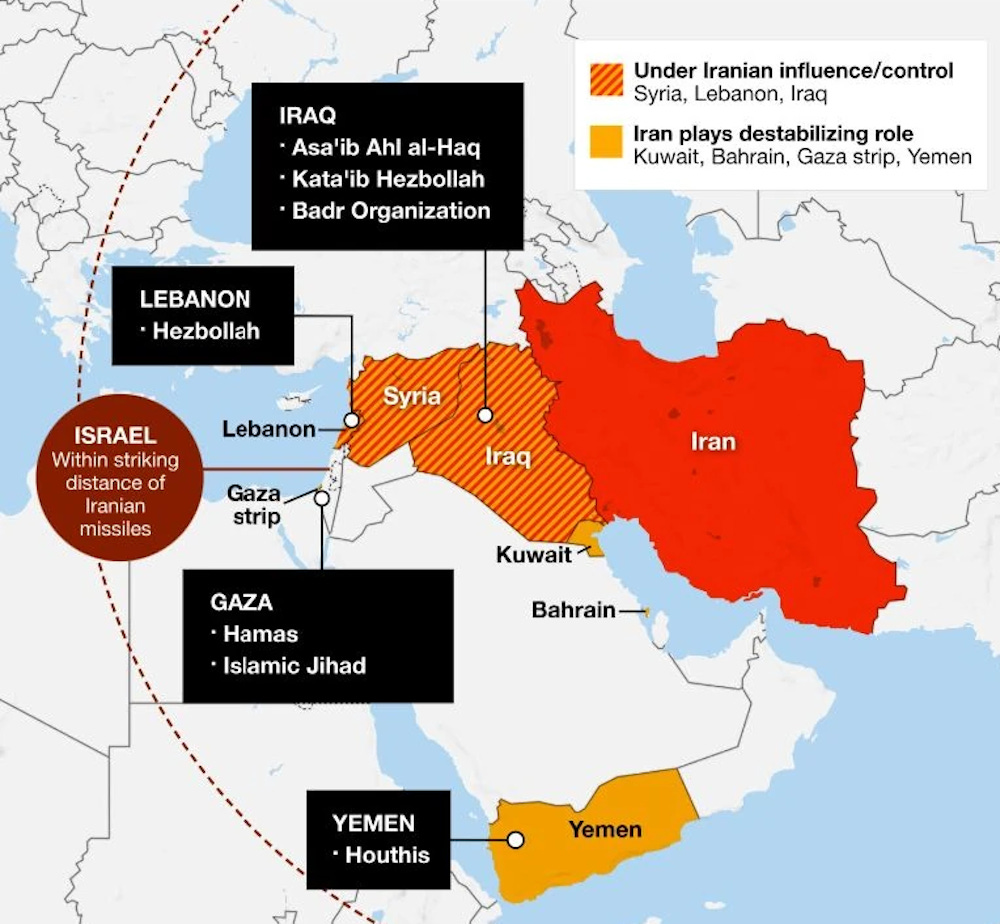
This has given rise to an ambivalent dynamic: while criticism of the system and its modes of regional projection has intensified, the imperial core has simultaneously grasped the centrality of the ballistic missile programme, now regarded across a broad spectrum of Iranian society as the sole reliable guarantee of national defence.
To this must be added decades of systemic corruption and resource mismanagement, compounded by an increasingly suffocating international sanctions regime.
Galloping inflation and surging prices are compelling vast swathes of the population to multiply their sources of income — many supplementing their earnings with evening work through platforms such as Snapp, Iran’s equivalent of Uber.
Today the Iranian socioeconomic fabric is deeply intertwined with enterprises connected to the Revolutionary Guards Corps, while large segments of the most vulnerable population depend on subsidies dispensed by the bonyad — charitable foundations that accumulated their capital through the expropriation of assets in the post-revolutionary period.
Though they do nothing to address the structural causes of poverty and serve instead to nourish the clientelist networks that sustain clerical power, these conglomerates nonetheless guarantee the survival of millions.
Into this context is woven a profound generational crisis of the nezam.
During the early decades following the Shah’s downfall, Iran was led by a predominantly youthful ruling class — one inclined to mock the gerontocracy of the Gulf’s other rulers.
Today the tables have turned entirely.
The ageing of the leadership and the emergence of new generations who are hostile to the revolutionary ideals have produced a structural fracture in Iranian society.
After the repeated failures of reformist initiatives — perpetually forced to mediate between the impulse for change and the resistance of the system’s conservative factions — a considerable share of young Iranians has concluded that the nezam is unreformable.
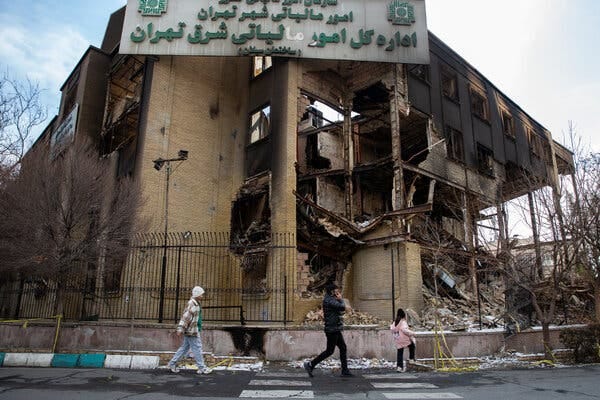
They are choosing exile, or nursing a deep frustration that is curdling into political radicalisation and a desire to overturn the existing order.
Two observations suffice to capture the current collective psychology of Iranians.
First: though exhausted by the inefficiencies and contradictions of the theocracy, the Persian heart of Iran is unwilling to relinquish this system of power — which embodies the institutional architecture responsible for the country’s sovereignty — in the absence of a structured alternative capable of replacing it swiftly.
Second: any population, even one living under oppression, would begin to question the intentions of a putative liberator if bombs were falling on civilian infrastructure in the opening phases of an intervention — especially when the party dropping them is theoretically capable of conducting precision operations.
While the American worldview tends to interpret engagement with the other in terms of submission and dominance, Iranians have been raised within a cultural inheritance steeped in the concept of resistance — against governments perceived as unjust and against powers whose hegemony is deemed oppressive.
There is a cruel irony in all of this.
The harder Trump squeezes, the more he reinforces precisely what he seeks to destroy: the regime’s narrative of resistance against the external enemy — the very narrative that holds together a country which, in so many other respects, is coming apart.
Every missile that falls, every tanker that is blocked, every sanction imposed becomes, for Khamenei, an argument.
Without intending to, Trump is authoring the propaganda of his own adversary.
I find this analysis to be nothing new. We already know this but so far no President had found the right formula. Trump is trying his. We will see.
Look….you could start SO MANY SENTENCES with “Trump does not understand……”
I mean take your pick!
We could do this all day!