
The Uncalculated War
Into war without a strategy. Out — if at all — without a plan.

Foreign Affairs Newsletter
Written by Luca Salvemini
No. 154 - March 22, 2026
Strategic Atlas is the new analytical column of Foreign Affairs Newsletter.
It is written for investors, entrepreneurs, analysts, researchers, and journalists who need to understand geopolitical complexity before it moves markets and governments.
The first issue is on Mexico, a story about power.
It sits at the intersection of two oceans, embedded in the American economic system to a degree no other country approaches — $900 billion in bilateral trade, the largest commercial relationship on the continent.
It is the world’s most populous Spanish-speaking nation, and one of the few countries where American cultural influence has found a ceiling: only 6% of Mexicans identify as evangelical-Protestant, against 55% in Costa Rica, 30% in Venezuela, 28% in Brazil.
And then there is the diaspora.
Thirty-eight million Mexicans living inside the United States, maintaining ties to the country of origin that no assimilation policy has severed. No other nation holds a comparable instrument of leverage over its neighbor — demographic, cultural, and political at once.
An emerging strategic power whose full weight has yet to be calculated.
That calculation is what Strategic Atlas is for.
Strategic Atlas — First Edition: Mexico - Available March 26, exclusively for paid subscribers.
Subscribe now.
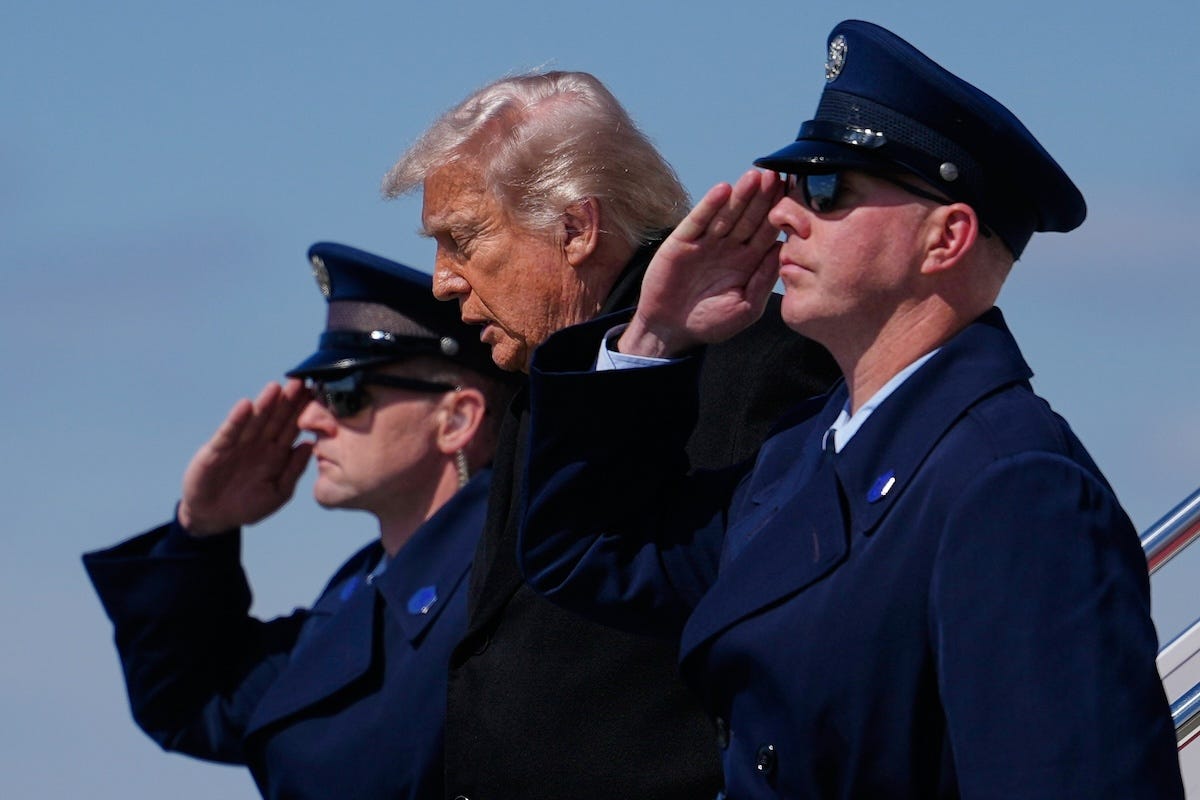
It has been another week of rockets and drones aimed where it hurts most.
The Iranian regime has struck or attempted to strike facilities in Qatar, Saudi Arabia, the United Arab Emirates, Bahrain, and Kuwait — ships, ports, refineries, storage depots, oilfields.
For three weeks, Iran has continued its retaliatory campaign against every Gulf state in reach. For three weeks, those states have continued not to strike back.
More than two weeks after triggering a war against Iran, Donald Trump faces a choice that admits no middle ground: press the offensive to achieve the objectives he declared at the outset, or seek a way out of a conflict that keeps expanding, with dangerous consequences on the military, diplomatic, and economic fronts.
Both options are deeply problematic.
Trump and his advisers drew the United States into the largest Middle Eastern war in twenty-five years while systematically underestimating what they were setting in motion.
According to American officials interviewed by the New York Times, the principal military achievement so far has been destroying much of Iran’s missile arsenal and air defences, and dealing a severe blow to its navy.
The regime, however, remains standing, and most of the stated objectives — beginning with the nuclear question — have not been met.
What follows is an attempt to bring order to the five principal mistakes that brought the United States to where it stands today.
I — Unilateral Isolation
Burning alliances before you need them
Allies treated with contempt eventually stop being allies.
Some respond to hostility in kind. Governments that have been humiliated find ways to hurt you — and sooner or later, the right moment presents itself.
Which is, more or less, what happened.
Trump’s fury at his allies’ refusal to help reopen navigation through the Strait of Hormuz has been widely reported.
Not one of the countries approached — European or otherwise — agreed to participate. This should surprise no one. For years, the president has attacked allies verbally, imposed tariffs on them, threatened to abandon them militarily, and insisted that American policy must serve American interests alone.
Since the start of his second term, the pressure has become more concrete: trade tariffs applied indiscriminately to allies and adversaries alike, often hitting the former harder; unilateral withdrawal from international agreements and agencies; threats to annex Greenland; a systematic downgrading of support for Ukraine combined with a conspicuous tilt toward Moscow.
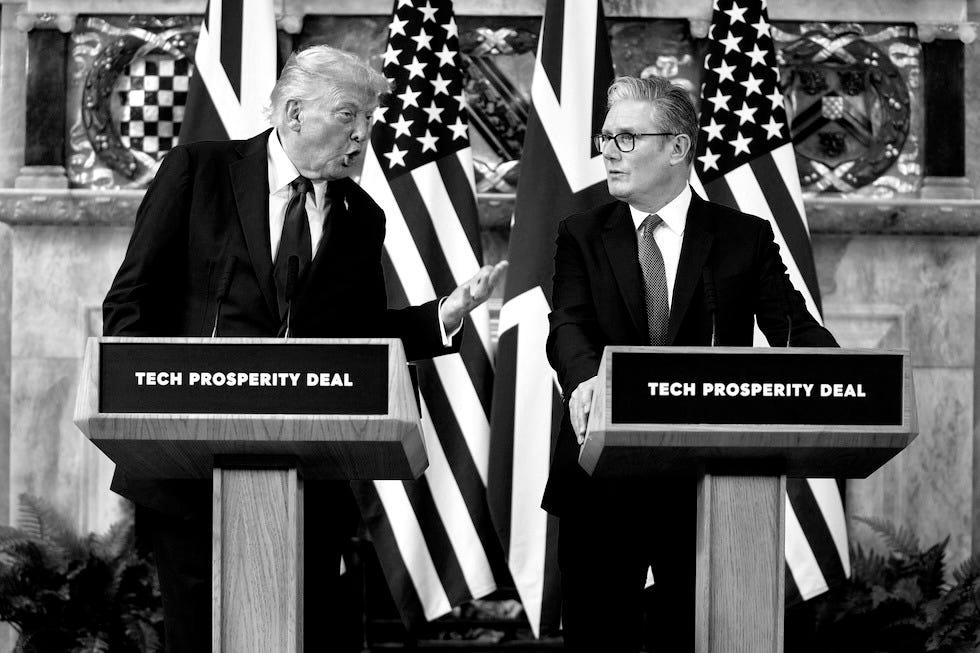
In recent days alone, Trump declared that Keir Starmer is “unfortunately not Churchill” and that Macron “will soon have to leave his office.”
When he sought allied support for the response to the Hormuz blockade, the answers were evasive but uniformly negative.
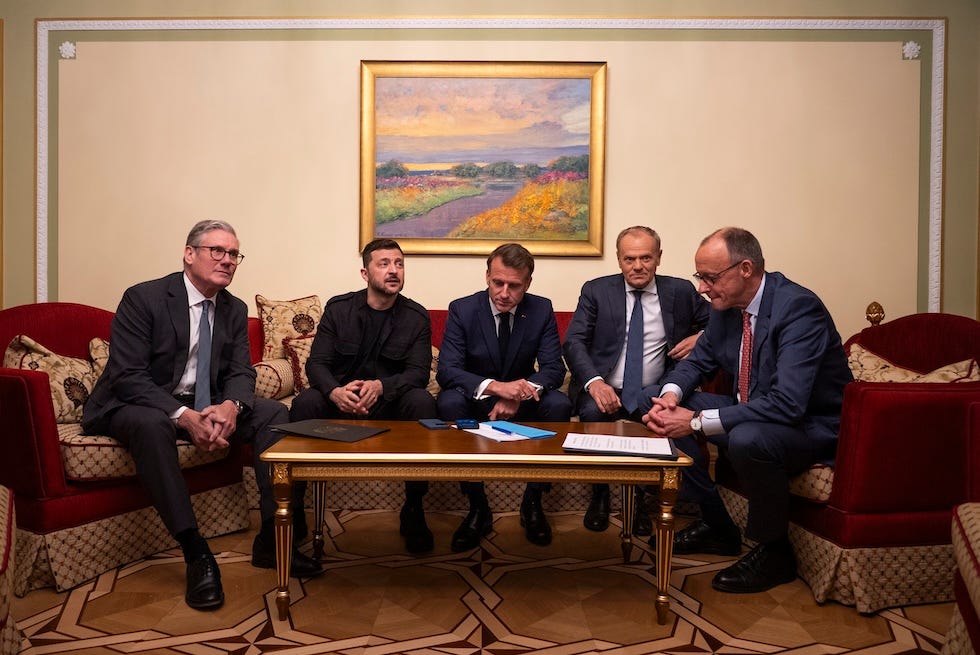
Germany’s Defence Minister Boris Pistorius was among the most direct: “This is not our war — we did not start it.”
Austrian Chancellor Christian Stocker declared that “Europe and Austria will not be blackmailed.”
Nearly every government reminded Washington that NATO is a defensive alliance, not an instrument designed to follow whoever chooses to start a war.
The sharpest disappointments have not come from Europe alone.
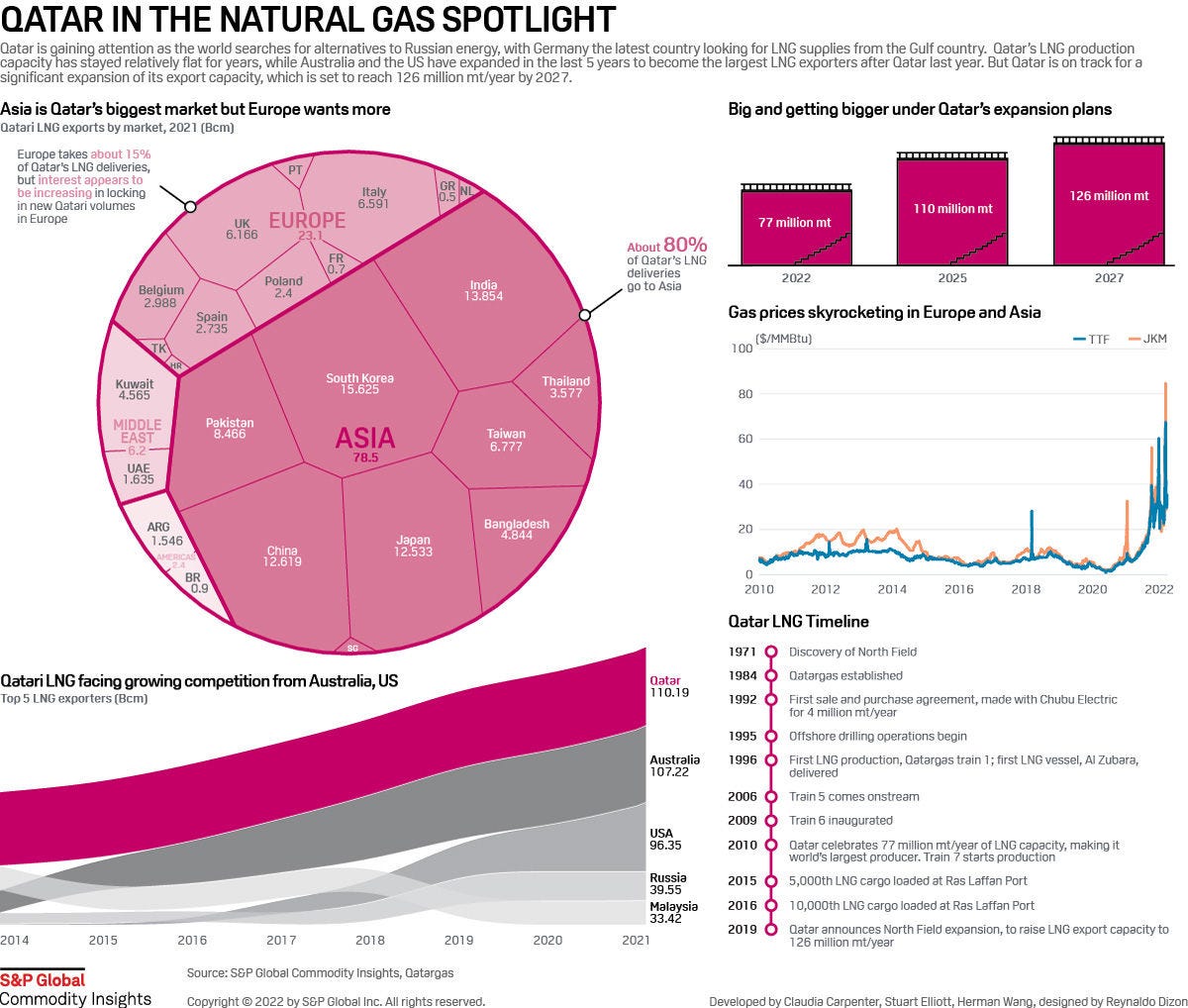
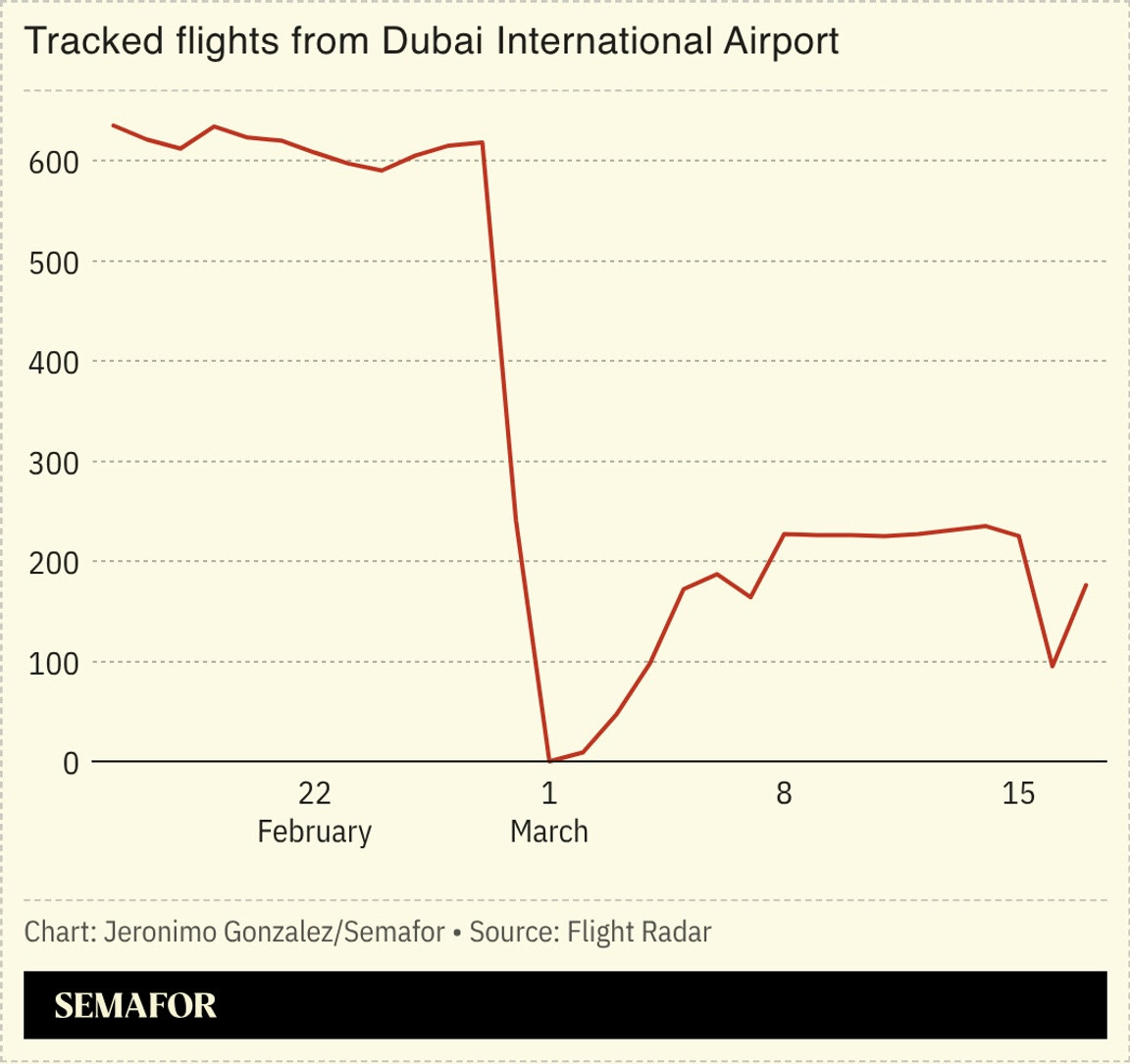
Qatar — which hosts the Al Udeid air base and contributed to shooting down Iranian jets and drones — chose to cut gas production, effectively reinforcing Tehran’s strategy of compressing the global economy to force Trump to stop.
Erdoğan issues verbal warnings to Iran while blocking a Kurdish Peshmerga ground offensive, fearing the implications for Kurdish independence.
Faced with allied recalcitrance, Trump did what Trump does: he accused them of ingratitude, issued threats, then declared that the United States had always preferred to act alone anyway, that this had merely been a loyalty test, that America needs no one.
He has since added: America doesn’t even use the Strait of Hormuz — it doesn’t matter to us. “If you want it open, open it yourselves.”
Unilateralism has produced genuine isolation, and that isolation now constrains every operational move Washington makes.
Invoking NATO intervention after three weeks of bombardment confirms that the United States entered this war without a strategy and is struggling to find a way out.
Trump’s rhetorical question — “Why are we keeping the Strait of Hormuz open when it’s China and others who need it? Why don’t they do it?” — reveals how thoroughly the internal logic of the operation has unravelled.
The ayatollahs’ regime, however mutilated, is still standing, now led by a younger and more radical figure than his predecessor, in an atmosphere of total siege mentality.
One should not be mistaken: the United States and Israel may still prevail in this war, whatever prevailing ultimately means. Given the disproportion of forces, it remains the most probable outcome.
The Hormuz blockade damages Iran too — Tehran has fewer alternative resources and less external support.
The question is when, at what cost, and above all, what it will leave behind.
II — Underestimating the Iranian Regime
Believing a revolutionary regime falls with its leader
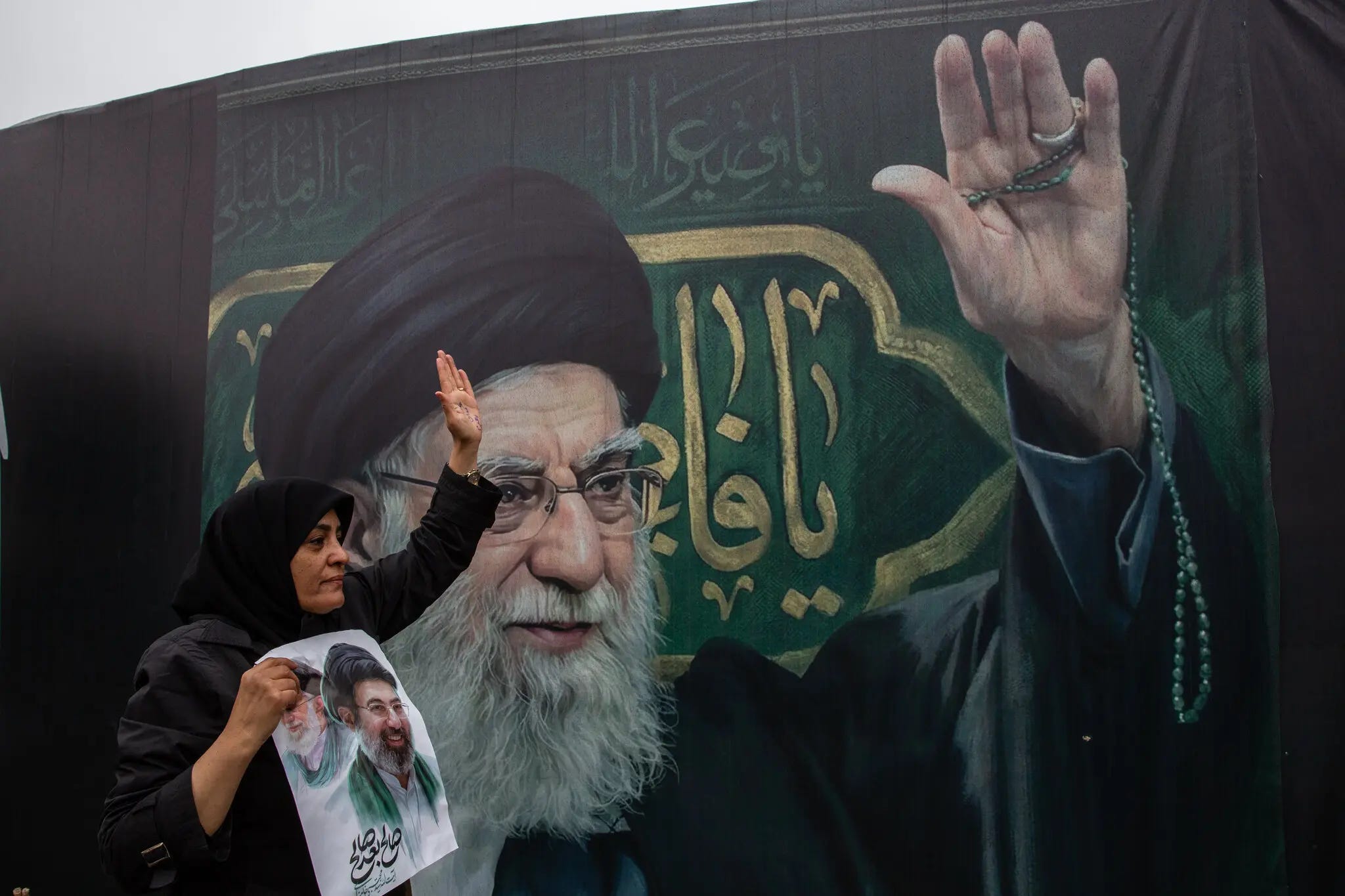
When Trump and his advisers anticipated a swift collapse of the Iranian regime, they were discounting its history.
The Islamic Republic was born from a popular revolution against the preceding monarchical order: such systems do not fall with the elimination of their leader, because they possess sufficient institutional force and social legitimacy to produce another.
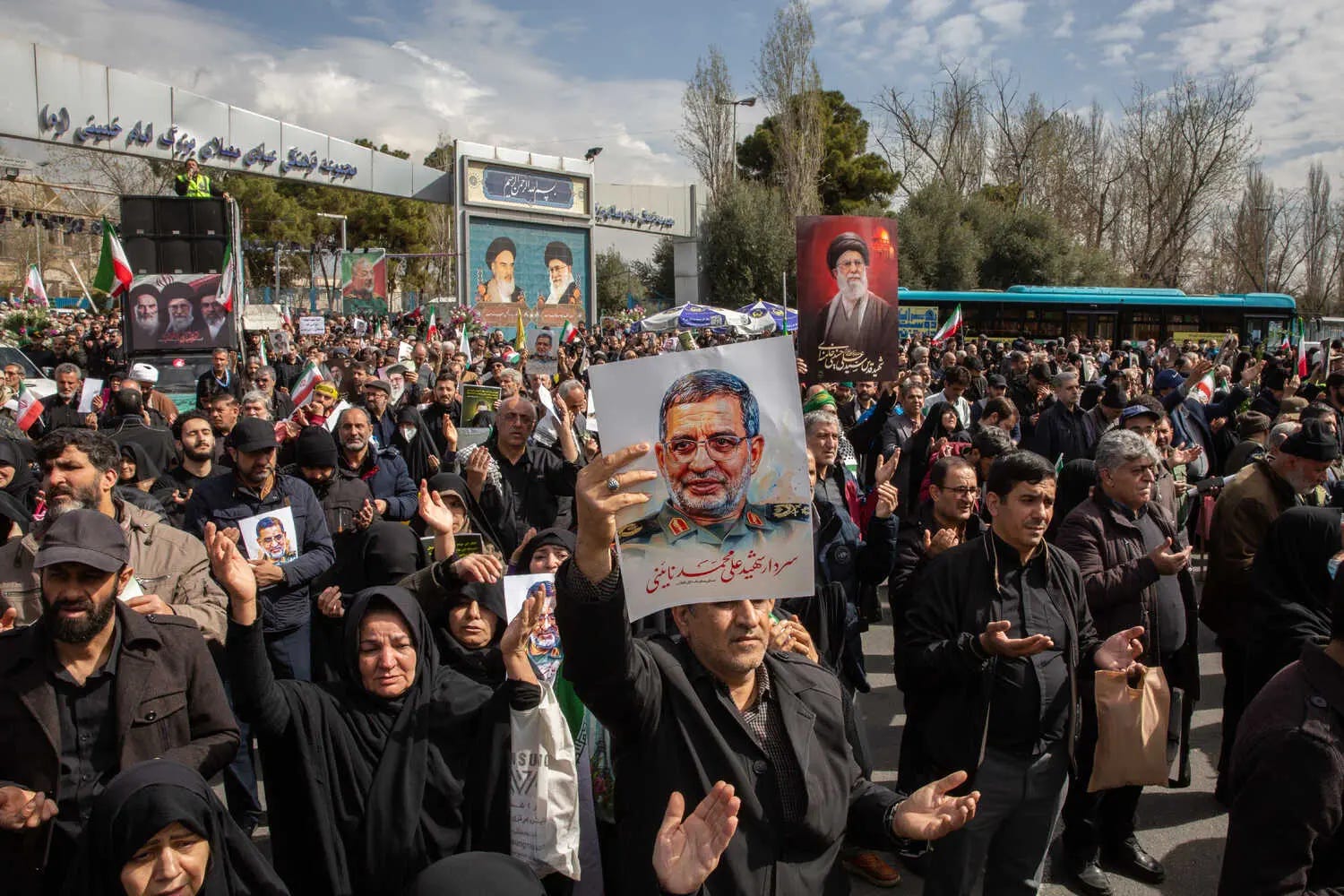
After Khamenei’s death, the regime elected a new Supreme Leader. The Revolutionary Guards remained in place, as did the militias that repressed and killed thousands of protesters in January.
Rather than inducing moderation, the decapitation of the leadership drove Tehran toward a more hardline posture.
Iran plainly lacks the capacity to inflict unacceptable losses on the United States or Israel, which can now strike at will having established overwhelming air superiority.
To compensate for this military weakness, the regime has intensified the nationalist dimension of the conflict: the longer the strikes continue, the more effectively Tehran consolidates its narrative of national defence against imperial aggression.
Within that framework, the most radical voices gain ground, at the expense of those who might have been open to compromise.
The regime survives, but hardens.
Iranian cyberattacks on American and Israeli targets have begun.
Among the early victims: Stryker Corporation, a Michigan-based manufacturer of advanced medical equipment.
Analysts and diplomats consulted by the Guardian over the past ten days consider a popular uprising implausible.
For Trump, this has a direct practical implication: he will have to negotiate with the new rulers.
With a regime that has consolidated around its hardest core during the course of the war, the prospect of dialogue is unpromising.
Iran emerges from this conflict militarily weakened, its leadership decimated, increasingly resembling a militia rather than a functioning state.
But it has not disappeared — and the vacuum surrounding it is not necessarily favourable to Washington.
III — No Measurable Objectives, No Exit Strategy
Starting a war without knowing how to end it
Nate Swanson, former Iran director at the National Security Council under Biden, has published an essay in Foreign Affairs titled How America’s War on Iran Backfired. He examines several scenarios for how the conflict might end. None of them favours the United States.
Trump has rejected comparisons with Vietnam, insisting that America is winning decisively and that the regime’s military capabilities have been reduced to near zero.
And yet the sense of victory is conspicuously absent.
The president wants to “permanently degrade” Iran’s capabilities — a formulation that, more than any battlefield statistic, reveals the difficulty of defining what success actually looks like.
The most basic question remains unanswered: what is the objective?
Congressional Republicans have set three conditions for their continued support: no ground troops, a strategy for ending the conflict, and a measurable indicator of success.
The administration cannot deliver on any of the three.
The most intractable issue is nuclear.
Trump claims that without the June strikes, Iran would have had a bomb within a month.
The stated goal is now to deprive the regime of any capacity — however remote — to develop nuclear weapons or transfer material to terrorist groups.
Achieving this would require recovering enriched uranium and destroying all remnants of the programme, high-risk operations that would necessitate special forces in Isfahan.
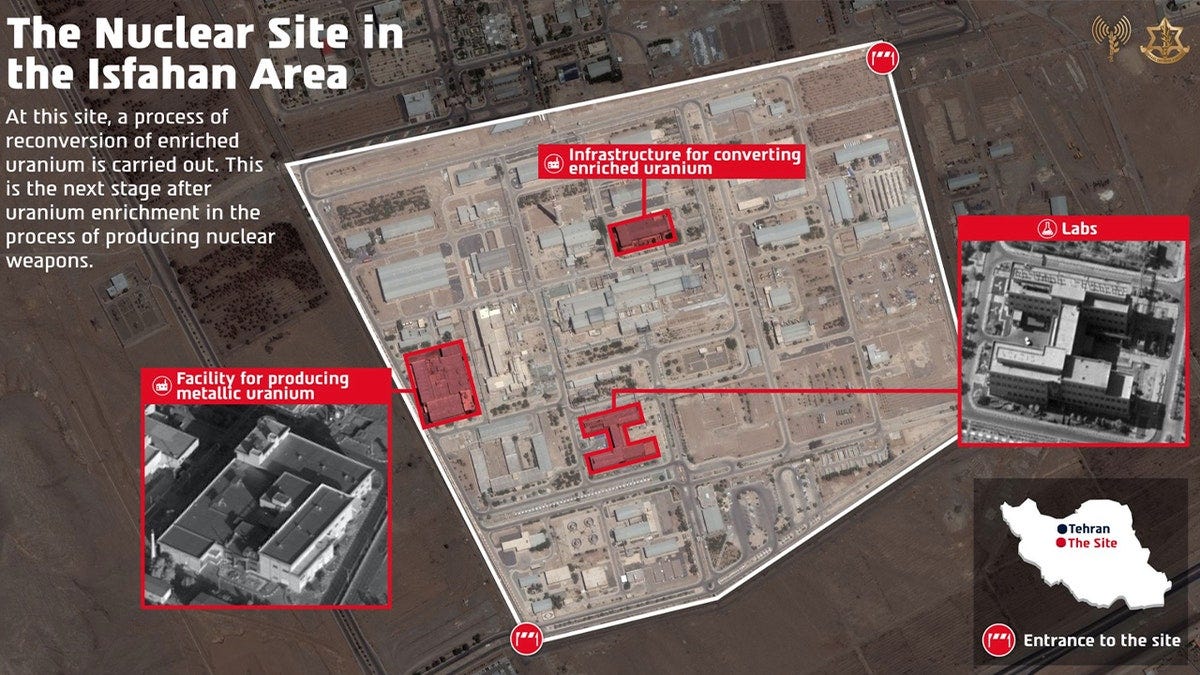
Evidently, the programme had not been “obliterated” in June, as Trump repeatedly claimed. Pressing forward would push the end of the conflict further into the future. A ceasefire that leaves the nuclear file open would leave unresolved the very problem Trump cited to justify the war.
The administration is talking tough while its actions suggest mounting desperation.
The Treasury Secretary has announced an easing of sanctions on Iranian oil. The administration is simultaneously bombing Iran and lifting sanctions on Iran.
When the policy contains that contradiction, things are plainly not going smoothly.
Waivers on Russian oil trade are expected to be extended as well — waivers and extensions: the vocabulary of weakness.
IV — Underestimating Asymmetric Warfare
Winning the conventional conflict while losing the economic one
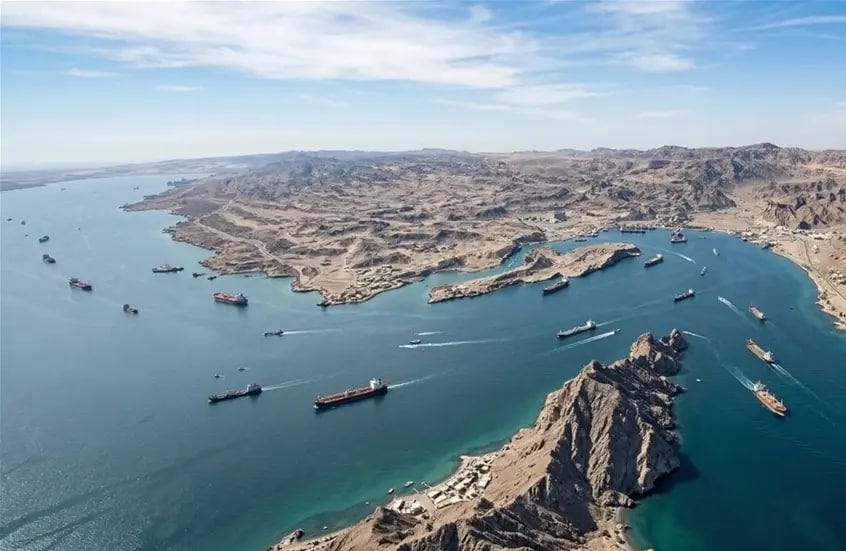
Despite the US Navy having developed operational plans for a Hormuz contingency over fifty years, none of those plans have been applied.
The administration underestimated the Iranian response in a structural sense: Tehran does not need military victories.
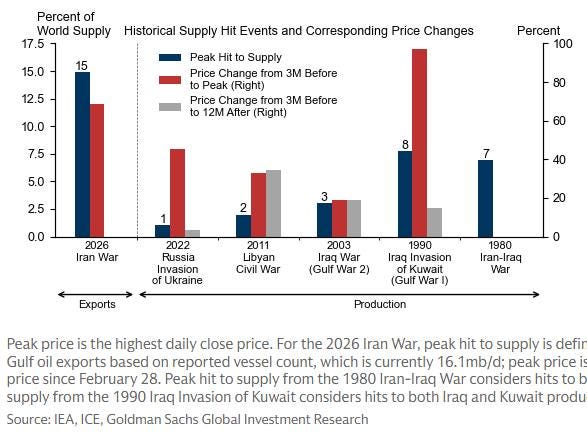
It only needs to hold shipping hostage — denying passage to tankers and cargo vessels — to move markets.
As Brian Katulis of the Middle East Institute has observed, Iran made a deliberate choice to wage an “economic conflict,” knowing that disrupting energy flows is the lever capable of sinking markets and draining global confidence.
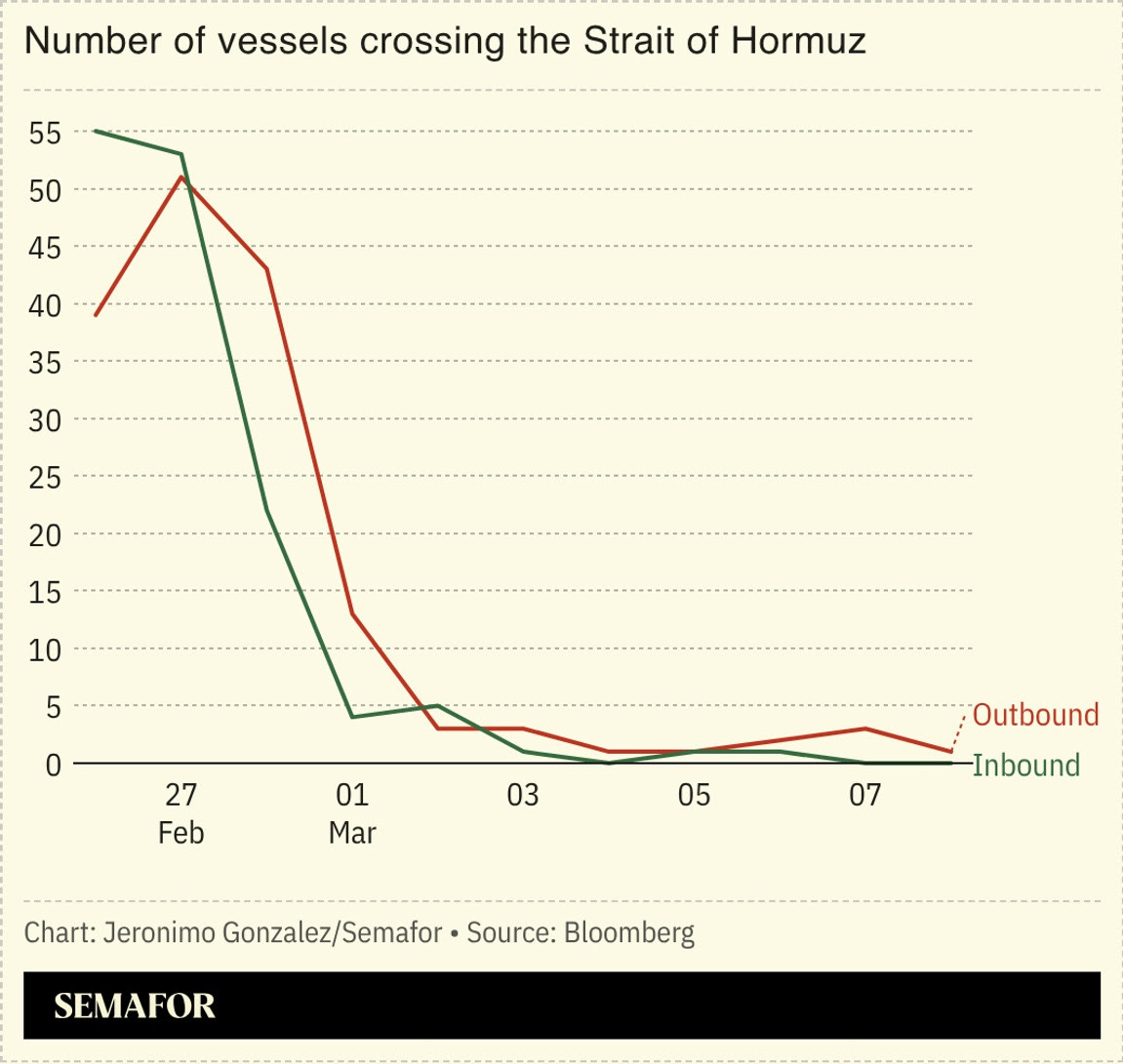
Iran’s navy has been destroyed, its air defence systems degraded, its missile stockpiles struck — and yet blocking the strait requires nothing more than explosive dinghies and attack drones.
The symmetry between military power and economic impact has completely broken down.
Arab and Gulf states, along with Israel, have endured missile and drone barrages on a scale without precedent.
American military technology has performed, but it has proven far from impenetrable against simple weapons.
The intercept rate of Iron Dome and the Gulf’s other defensive systems has hovered around 90 per cent — a high figure that nonetheless means one projectile in ten reaches its target.
Including civilian targets, as happened on the first day in Abu Dhabi.
Jihadism has elevated asymmetric warfare to an art form.
It cannot be eradicated by military means alone: it absorbs devastating blows without suffering definitive ones.
It retreats, mutates, and resurfaces.
Without genuine de-escalation, renewed Iranian attacks on Israel, American bases, and Gulf states remains a concrete prospect.
Iran had spent years preparing for this war; its protocols called for distributing command authority to decentralised structures to prevent leadership decapitation from producing chaos.
The approach has proved effective.
One underreported element concerns the Houthis.
The Yemeni Shia militia has been conspicuously absent from the fighting — likely in a posture of deliberate dormancy, conserving their arsenal for a more propitious moment.
Any serious account of Trump’s endgame cannot afford to overlook them.
V — The Miscalculation of great power competition: China wins by watching
Turning a regional war into a strategic windfall for Beijing
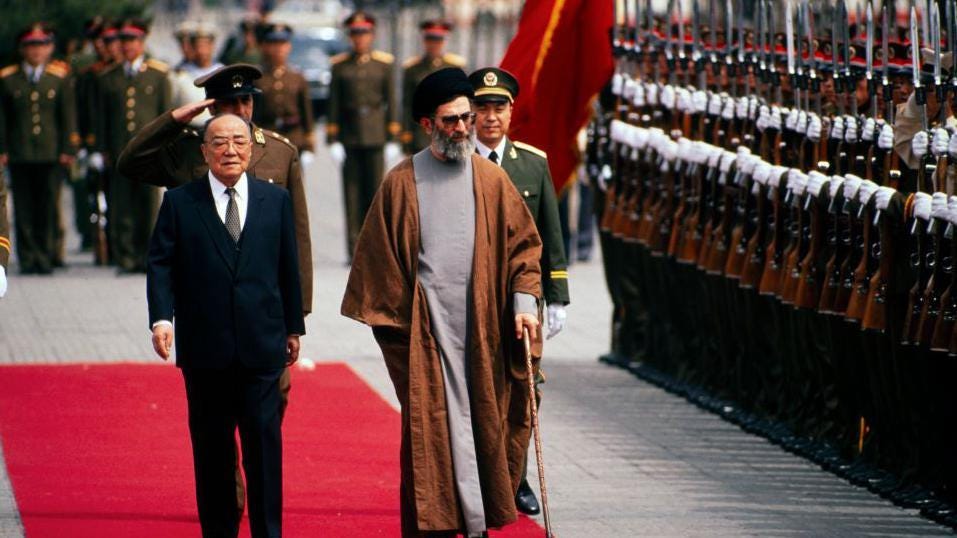
The Gulf war has evolved into a strategic contest between Washington and Beijing.
The National Security Strategy published last December was unambiguous: faced with the Chinese challenge, the United States must leverage its economic and military strength, and Iran is the proving ground.
The paradox is that the proving ground is yielding results that benefit precisely the adversary it was meant to contain.
American shale oil insulates the United States from Gulf energy markets to a degree unavailable to the major Asian economies.
China is structurally exposed: up to 45% of its oil imports pass through the Strait of Hormuz. And yet it is Beijing that is gaining from the crisis.
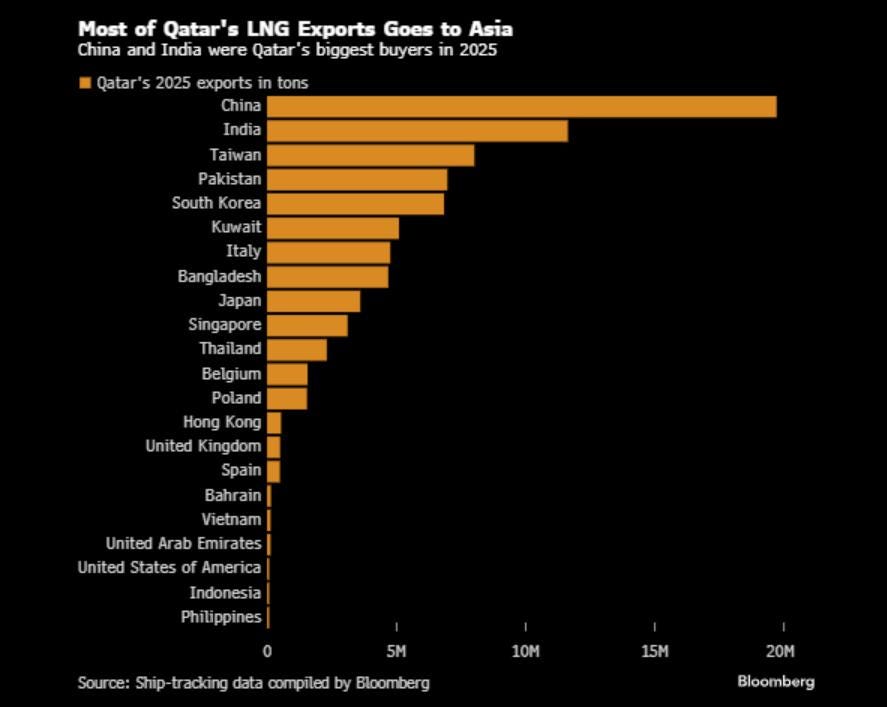
Chinese military planners are studying with close attention the tactics, strengths, and vulnerabilities of every actor involved.
They are watching with quiet satisfaction as the United States burns through stocks of interceptor missiles and materiel, while Washington reallocates resources from the Pacific to the Middle East.
The prospect of American forces becoming bogged down once more in the Middle East — drawn away from the Indo-Pacific theatre — is a strategic outcome Beijing could not have engineered more effectively on its own.
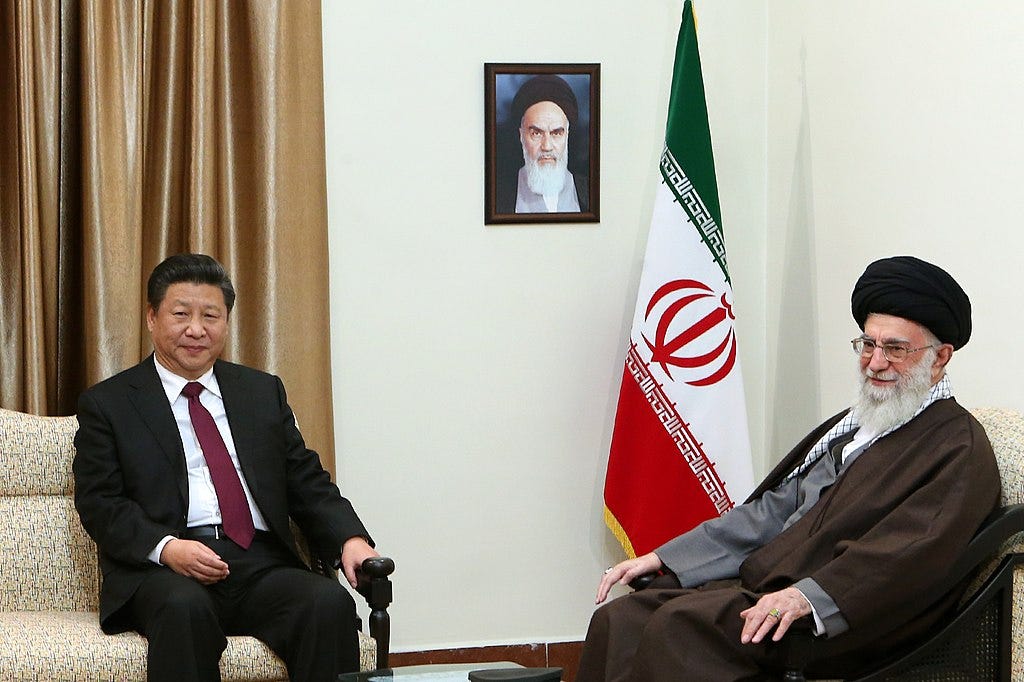
China’s most significant advantage, however, is reputational.
The more erratic and aggressive Trump appears, the more Xi Jinping consolidates his image as a measured, multilateralist leader — a posture that seems to draw directly on a maxim from Sun Tzu: wait with composure while the enemy exhausts himself.
As John Spencer noted in the Wall Street Journal, the conflict is also a stress test of Chinese military credibility — Tehran receives technology from Chinese suppliers, including components for its missile programmes — but Beijing’s net strategic balance remains firmly positive.
The deeper dynamic is systemic.
The post-war global order held because the United States was perceived as a stabilising force. If Washington comes to be seen as a destabilising one, the legitimacy of American leadership will erode — not in a sudden collapse, but in the slow attrition that the historian Edward Gibbon identified as the true mechanism of imperial decline.
The BRICS push to reduce dependence on dollar-denominated finance, the Saudi-Iranian rapprochement brokered by Beijing in 2023, the quiet strategic diversification of the Gulf monarchies: all of these are signals of an order in the process of being redrawn.
The Hormuz crisis is accelerating them.
Five Mistakes, one question
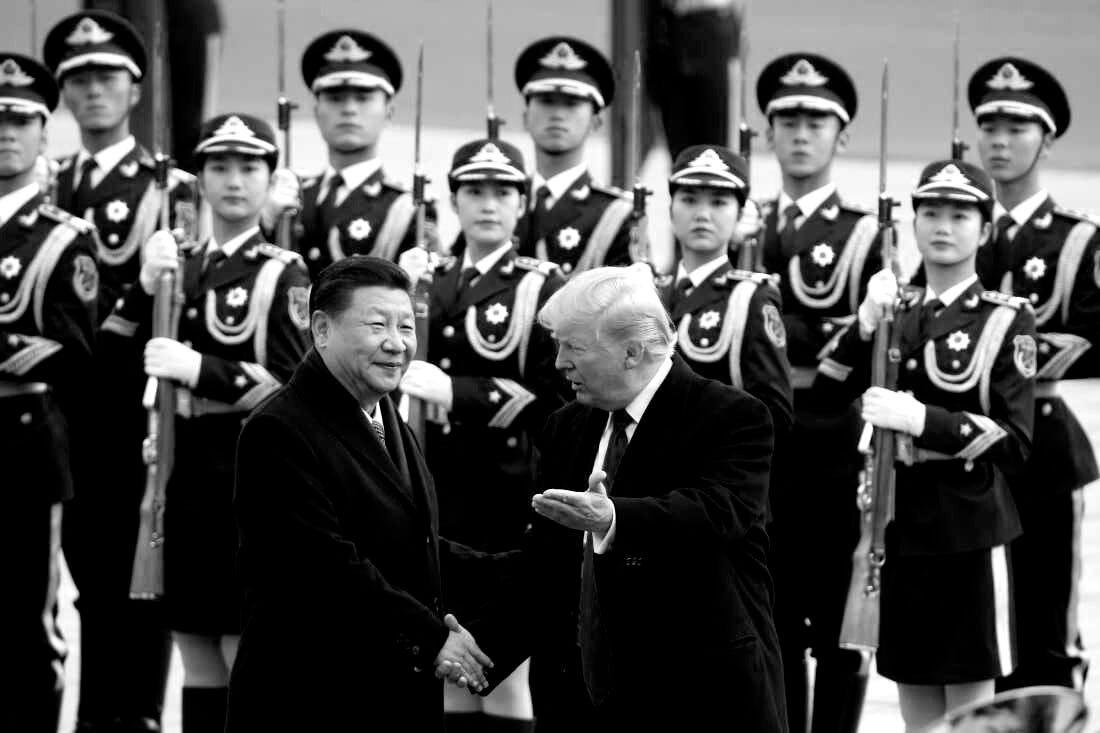
Diplomatic isolation, the underestimation of the regime, the absence of an exit strategy, blindness to asymmetric warfare, the inadvertent windfall delivered to Beijing: taken together, these five mistakes do not look like the product of faulty calculation.
They look like the product of no calculation at all.
Great rival powers typically face a version of the prisoner’s dilemma: they must find ways to reassure one another that neither seeks the other’s destruction, on pain of provoking pre-emptive action.
Reciprocal escalation is dangerous precisely because it compels each side to raise the stakes or forfeit whatever the adversary gained in the previous round.
As the strategist Ray Dalio has written, the two things one can be most certain of in war are that it will not unfold as anticipated, and that it will be considerably worse than imagined.
Winning a war means securing what matters most without losing what matters most.
Wars that cost far more in lives and treasure than they yield in benefits are, by that measure, simply foolish.
Trump now faces the prospect of negotiating with a regime that has rallied around its hardest core. The allies he alienated will not return without political compensation. The Iranian nuclear programme has not been neutralised. And China is watching.
Today it would be premature to declare the end of American global leadership.
The United States remains the world’s foremost military power and retains a central position in global finance and technology. But hegemonic systems rarely collapse outright — they tend to weaken gradually, as confidence in the dominant power erodes.
Every world power, as Dalio reminds us, has its moment of ascendancy — shaped by the uniqueness of its circumstances and the character of its culture.
All of them, eventually, decline.
Some do so with greater grace than others, with less trauma — but decline nonetheless. Traumatic declines can produce some of the worst episodes in history, when the great struggles over wealth and power exact an extraordinary price in both treasure and human life.
The question worth asking — in Gibbon’s terms — is whether this is one of those moments when a single strategic miscalculation accelerates a process of decline already under way.
Or whether the United States retains the capacity to adapt its leadership to a world it has helped to destabilise.
The answer is not yet written.
But the coming weeks will make it considerably more legible.
Luca Salvemini, thank you for laying out the consequences of this war with such clarity. Your analysis captures something many policymakers in Washington either overlooked or chose to ignore: launching a conflict without a clear exit strategy is not strength—it is strategic drift. That short-sightedness is now becoming painfully visible, not just for the United States, but for the global system as a whole.
What stands out most in your argument is the way this war is already reshaping the geopolitical balance. Instead of isolating Iran, the conflict risks elevating it. Historically, external pressure has often strengthened Iran’s regional posture rather than weakened it. This moment appears no different. Tehran now has an opportunity to reposition itself as both a victim of aggression and a central player in regional negotiations. That is not the outcome Washington intended, but it is increasingly the reality.
At the same time, China emerges as the quiet beneficiary. While the United States expends resources and political capital in a volatile conflict, Beijing gains room to maneuver. It can deepen energy ties, expand its diplomatic footprint, and present itself as a stabilizing alternative in a fractured global order. This is the paradox of modern conflict: the country that initiates the war is not always the one that shapes the long-term outcome. In this case, China is positioned to extract strategic advantage without bearing the costs of direct engagement.
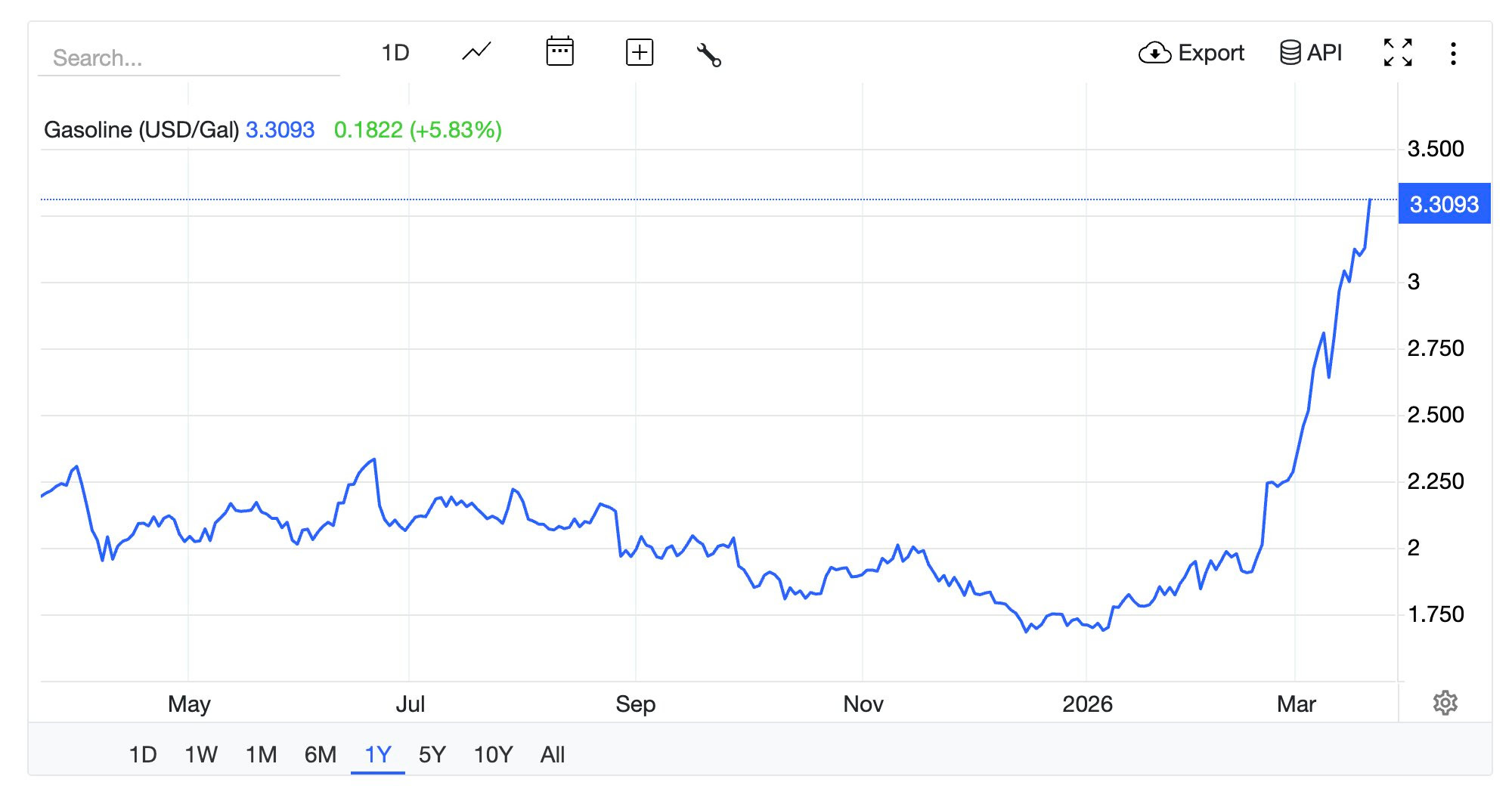
Meanwhile, the global community is paying the price in immediate and tangible ways. Energy markets have tightened, and higher fuel costs are rippling through economies already under strain. For many countries, especially in Europe and the developing world, this translates into higher inflation, slower growth, and increased political pressure at home. Wars today are not contained events. They are economic shocks that travel quickly and widely.
Domestically, the political implications for Donald Trump and the Republican Party are significant. With midterm elections only months away, this conflict introduces a layer of uncertainty that could reshape voter sentiment. Historically, Americans have been wary of prolonged or undefined military engagements, particularly when the economic consequences become visible in everyday life. Rising costs, combined with the absence of a clear strategic objective, create a difficult environment for any administration to defend.
There is also a constitutional dimension that cannot be ignored. The decision to launch this war without congressional authorization raises serious questions about adherence to the War Powers Resolution of 1973. That framework exists precisely to ensure that military action reflects not just executive will, but the consent of the American people through their elected representatives. Bypassing that process may achieve speed, but it comes at the cost of democratic legitimacy.
In the end, Luca, your piece underscores a deeper truth. Power exercised without restraint or long-term planning often produces the very instability it seeks to prevent. This war risks strengthening adversaries, straining alliances, and burdening the global economy—all while leaving the United States politically and strategically exposed. That is not a position of strength. It is a moment of reckoning.
The impacts on human suffering, democratic opposition, broader public opinion and international law are not considered. Even though these factors are not deemed important by Trump, they nonetheless have a bearing on events and should be calculations of any foreign policy decision to go to war. These factors also undermine the longer term "legitimacy of American leadership."