
Divided Within, Weakened Without
What the Roman Empire understood about political identity — and what contemporary liberal democracies have forgotten

Foreign Affairs Newsletter
Written by Luca Salvemini
No. 165 - June 7, 2026
In a few days I will announce the next country for the June issue of Strategic Atlas.
In keeping with previous editions, it will be a geopolitically strategic country whose history, strengths, vulnerabilities, and geopolitical positioning are more essential to understand today than ever before.
Three events from recent weeks, geographically and culturally distant from one another, deserve to be read together. They illuminate the same structural fault line.
On the night of May 30th, in Paris, celebrations of PSG’s Champions League victory ended with one person dead, 219 injured and 283 arrested in the capital alone. The looting spread beyond the capital, with similar episodes reported in Rennes, Strasbourg and Grenoble.
A sporting triumph — one of the rare occasions on which a society can recognise itself as a collective — had degenerated into widespread urban violence.
In the United Kingdom, a criminal case has reopened wounds the country had been persuading itself were healed. Henry Nowak, an 18-year-old student of Polish origin, was murdered in Southampton in December 2025 by a man who, having stabbed him five times, falsely accused him of racial assault. Bodycam footage shows officers handcuffing Nowak as he lay dying on the pavement.
His father publicly implored that his son’s death not be used to sow division or hatred — a plea that, in a cohesive society, would never need to be made.
In the background, there is the Swedish parable.
For decades a byword for generous openness, Sweden recorded 2.5 times more gun deaths than the European average in 2023. Its former Social Democratic prime minister has publicly acknowledged that the country failed to integrate the large waves of immigrants it received over two decades, producing parallel societies and organised violence.
These three phenomena are not accidents. They are symptoms.
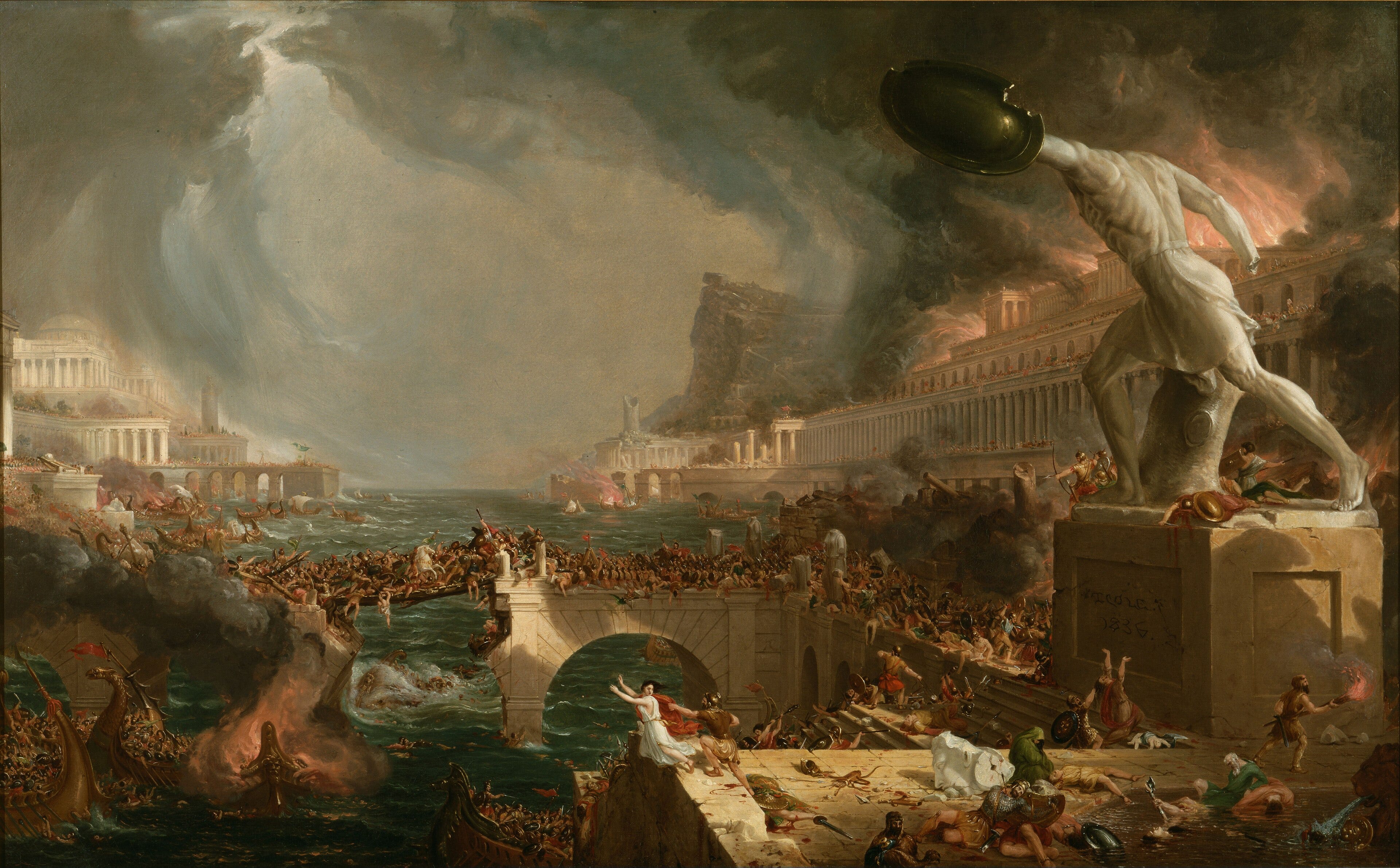
To understand why, it helps to start not in Paris, Southampton or Stockholm, but in ancient Rome.